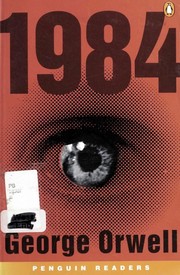
Books like 1984
by George Orwell · 2003
Updated June 2026
Book data: Open Library · Taste signals: BookTaste model
📡 1984 is George Orwell's totalitarian nightmare set in a surveillance state so complete it has rewritten memory itself — and the language people use to think. Fans love it for the suffocating dread that never lets up, the razor-sharp political satire, and Winston Smith's desperate, doomed hunger for truth in a world where truth is a crime. It works as both a gripping thriller and a philosophical gut-punch about power, identity, and what it means to remain human.
Picked by taste overlap — not popularity alone.
What to read next
Closest match
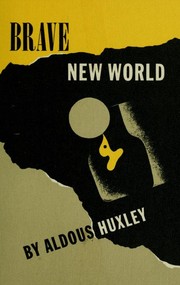
Brave New World
Aldous Huxley · 1932
🧠 Thought Control🌐 Dystopian World📖 Political Satire🌐 Where Orwell's state rules through pain and fear, Huxley's World State achieves the same erasure of individuality through pleasure, conditioning, and engineered contentment — making it the sharpest ideological twin to 1984.
- Matches
- totalitarian society erasing free thought · individuality crushed by the state · classic dystopian fiction
- Differs
- control through pleasure not terror · lighter tone, more satirical · no single oppressive villain figure
- Skip if
- You want a thriller pacing and a protagonist fighting back — Brave New World is more philosophical essay than tense narrative.
Find my next favorite readNo signup · add a few books to build your radar
●●● strong · ●●○ medium · ●○○ light · ○○○ none
Solid = this book · dashed = 1984
- We
We
Yevgeny Zamyatin · 1924
👁️ Surveillance State✊ Resistance🌐 Dystopian World📡 The direct template Orwell acknowledged: a numbered citizen in a glass-walled One State keeps a diary of awakening rebellion, inventing nearly every trope 1984 would refine — surveillance architecture, doublethink, the fatal love affair.
- Matches
- glass-panopticon surveillance society · diary of forbidden inner life · love affair as act of rebellion
- Differs
- harder sci-fi, more abstract prose · less emotionally devastating ending · Soviet-era Russian context
- Skip if
- You find early 20th-century experimental prose a barrier — Zamyatin's style is more detached and clinical than Orwell's.
Solid = this book · dashed = 1984
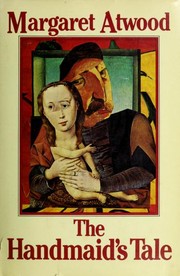
The Handmaid's Tale
Margaret Atwood · 1985
👁️ Surveillance State✊ Resistance💔 Bleak Endings✊ Atwood builds a theocratic surveillance regime where bodies, language, and memory are all state property — the same throttling claustrophobia as 1984, refracted through gendered oppression and delivered in Offred's intimate, fragile voice.
- Matches
- totalitarian state controlling bodies and language · protagonist's inner life as only refuge · resistance is dangerous and fragile
- Differs
- gendered lens, female protagonist · religious rather than political ideology · ambiguous, open ending
- Skip if
- You want male-led narratives or are not ready for explicit bodily subjugation as a central theme.
Solid = this book · dashed = 1984
Not similar books. Similar taste.
It reads the grain of every book you've loved — why it stayed with you — and follows that thread to your next read. Not the bestseller list, not the crowd: just your taste. Free, no signup.
Add books you've read; BookTaste builds your taste radar and recommends from it.
Taste radar — read from the themes shared across 1984 and the picks below
Strongest taste signals: 👁️ Surveillance State · 🧠 Thought Control · 🌐 Dystopian World
How taste signals are generated
BookTaste's model reads the themes, moods, settings, and reader hooks of the base book, then scores every pick across those same axes — what overlaps, what diverges. Ordered by taste fit, not by popularity.

Darkness at Noon
Arthur Koestler · 1940
🧠 Thought Control💔 Bleak Endings📖 Political Satire🧠 A Stalinist show-trial novel that dissects how totalitarian logic colonises the mind of a true believer — Rubashov's interrogation chapters are arguably the most intellectually devastating companion reading to Winston's Room 101.
- Matches
- state dismantles individual conscience · psychological interrogation as core drama · political ideology vs. human reality
- Differs
- protagonist is a Party insider, not an outsider · no love story to speak of · more philosophical dialogue, less action
- Skip if
- You need a narrative drive or world-building richness — this is almost entirely interior monologue and ideological debate.
Solid = this book · dashed = 1984
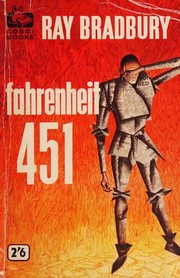
Fahrenheit 451
Ray Bradbury · 1953
🧠 Thought Control✊ Resistance🌐 Dystopian World📖 Bradbury's fireman Guy Montag enforces the burning of books in a society anaesthetised by screens — a more poetic, American-flavoured cousin to Orwell's assault on truth and memory.
- Matches
- state destroys dangerous knowledge · protagonist's awakening inside the machine · intellectual suppression as central theme
- Differs
- shorter, lyrical prose style · less brutal, more melancholic tone · ends with cautious hope
- Skip if
- You want a tightly plotted thriller — Bradbury's pace is meditative and the world-building is impressionistic rather than systematic.
Solid = this book · dashed = 1984

The Trial
Franz Kafka · 1925
👁️ Surveillance State💔 Bleak Endings👁️ Josef K. is arrested by an opaque, all-powerful bureaucracy that never explains its charges — Kafka's nightmare of systemic power that grinds the individual to nothing prefigures Orwell's Ministry of Truth with the horror of pure absurdity.
- Matches
- individual powerless against faceless state · paranoid dread saturating every page · protagonist can never fully understand the system crushing them
- Differs
- surreal rather than realist · no political ideology made explicit · shorter, more fragmented narrative
- Skip if
- You need a defined dystopian world or sci-fi framing — Kafka offers dread without world-building or clear political allegory.
Solid = this book · dashed = 1984
Frequently asked
- What makes 1984 different from other dystopian novels?
- Most dystopias show a society gone wrong from the outside — 1984 drags you inside the machine and makes you feel the mechanics of manufactured consent in real time. The Party doesn't just control behaviour; it controls the past, language, and ultimately the capacity to think a disloyal thought. That's what sets it apart: the terror is epistemological, not just physical.
- Is Brave New World or 1984 scarier?
- 🧠 Orwell's world is scarier if you fear brutality and surveillance; Huxley's is scarier if you fear voluntary surrender of freedom for comfort. Most readers find 1984 more viscerally horrifying on first read, but Brave New World lingers longer because its premise looks more like where we're actually heading.
- Are there any recent books with the same feel as 1984?
- For contemporary dystopias with the same suffocating surveillance dread, try Kazuo Ishiguro's Never Let Me Go (quieter but just as devastating) or Dave Eggers' The Circle (tech-age panopticon). Neither quite matches Orwell's ideological precision, but both carry that same sense of a world that has closed off escape.
- Should I read We before 1984?
- Not required, but worth it — Zamyatin's We (1924) is the direct ancestor Orwell read in French and cited explicitly. Reading We first makes 1984's architecture feel like a conscious conversation with its predecessor rather than a standalone vision. If you've already read 1984, We works perfectly as a fascinating reverse-engineering of everything Orwell refined.
Book data and covers from Open Library. Picks and taste signals are generated by BookTaste's taste model.