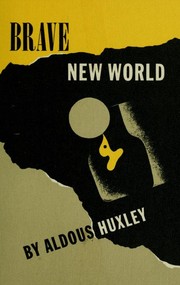
Books like Brave New World
by Aldous Huxley · 1932
Updated June 2026
Book data: Open Library · Taste signals: BookTaste model
🌐 Brave New World drops you into a future where humanity has traded freedom for frictionless happiness — soma pills, engineered castes, and a society that's abolished suffering by abolishing meaning. Huxley's genius is that the dystopia feels seductive: the horror creeps in slowly as you realize contentment might be the most insidious cage of all. Fans love it for its razor-sharp satire of consumerism and conformity, its philosophical bite, and the way it makes you interrogate your own desires. If that unsettling cocktail of dark wit and existential dread is your thing, these six picks will hit the same nerve. 🧬
Picked by taste overlap — not popularity alone.
What to read next
Nineteen Eighty-Four
George Orwell · 1949
🏛️ Dystopian Society🧠 Philosophical Depth⚙️ Tech & Control🏛️ Where Huxley's dystopia seduces with pleasure, Orwell's crushes with totalitarian terror — together these two books define the entire genre and readers who love one almost always need the other.
- Matches
- oppressive state erasing individuality · protagonist rebels against the system · philosophical weight on every page
- Differs
- fear-based control, not pleasure-based · darker, grimmer tone throughout · no satirical lightness at all
- Skip if
- You want the seductive, almost comfortable horror of Huxley — Orwell is relentlessly bleak and offers no such ambiguity.
Find my next favorite readNo signup · add a few books to build your radar
●●● strong · ●●○ medium · ●○○ light · ○○○ none
Solid = this book · dashed = Brave New World
- We
We
Yevgeny Zamyatin · 1924
🏛️ Dystopian Society🧠 Philosophical Depth⚙️ Tech & Control📖 Written before both Huxley and Orwell, Zamyatin's direct literary ancestor of Brave New World imagines a glass-walled city-state where citizens have numbers instead of names and all privacy has been engineered away.
- Matches
- engineered society abolishing freedom · narrator slowly awakens to the horror · philosophical critique of utopia
- Differs
- older, more austere prose style · less satirical, more mathematical · romance subplot more central
- Skip if
- You find early-20th-century translated prose difficult — the writing is deliberately angular and can feel distancing.
Solid = this book · dashed = Brave New World
Goes deeper
The Handmaid's Tale
Margaret Atwood · 1985
🏛️ Dystopian Society😶 Loss of Self🗣️ Satirical Prose🌸 Atwood builds a theocratic dystopia as meticulously imagined as Huxley's — but where Brave New World controls bodies through pleasure, Gilead controls them through scripture and violence, making the horror feel disturbingly plausible.
- Matches
- women's bodies controlled by the state · protagonist trapped in engineered role · sharp satirical lens on real ideology
- Differs
- explicitly feminist focus · more viscerally disturbing, less witty · first-person intimate narrator
- Skip if
- You want cerebral philosophical detachment — Atwood's book is emotionally harrowing and deeply personal in a way Huxley deliberately avoids.
Solid = this book · dashed = Brave New World
Not similar books. Similar taste.
It reads the grain of every book you've loved — why it stayed with you — and follows that thread to your next read. Not the bestseller list, not the crowd: just your taste. Free, no signup.
Add books you've read; BookTaste builds your taste radar and recommends from it.
Taste radar — read from the themes shared across Brave New World and the picks below
Strongest taste signals: 🏛️ Dystopian Society · 🧠 Philosophical Depth · ⚙️ Tech & Control
How taste signals are generated
BookTaste's model reads the themes, moods, settings, and reader hooks of the base book, then scores every pick across those same axes — what overlaps, what diverges. Ordered by taste fit, not by popularity.
Fahrenheit 451
Ray Bradbury · 1953
🏛️ Dystopian Society⚙️ Tech & Control😶 Loss of Self🔥 Bradbury's fireman-protagonist lives in a society that burns books to keep citizens blissfully distracted — a kindred vision of state-managed happiness destroying the very capacity for depth that makes us human.
- Matches
- happiness enforced by destroying thought · protagonist awakens to a hollow world · technology as an instrument of control
- Differs
- shorter, more lyrical and poetic · less satirical wit, more elegy · no caste system or genetic engineering
- Skip if
- You want Huxley's dense philosophical argument — Bradbury is emotionally evocative but lighter on intellectual scaffolding.
Solid = this book · dashed = Brave New World

Never Let Me Go
Kazuo Ishiguro · 2005
😶 Loss of Self🧠 Philosophical Depth❤️ Romance & Desire💔 Ishiguro's quiet masterpiece shares Huxley's central horror: people engineered for a purpose they did not choose, living inside it with eerie complicity — but told in a hushed, elegiac voice that makes the dread accumulate slowly and devastatingly.
- Matches
- society uses humans as biological resource · characters accept their fate with tragic calm · questions what makes a life fully human
- Differs
- no overt satire or political commentary · intimate small-scale story, not world-building · science fiction nearly invisible in the prose
- Skip if
- You want the intellectual fireworks and wit of Huxley's satirical voice — Ishiguro is muted, melancholic, and avoids argument.
Solid = this book · dashed = Brave New World
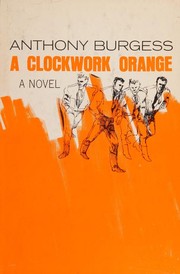
A Clockwork Orange
Anthony Burgess · 1962
🏛️ Dystopian Society🧠 Philosophical Depth🗣️ Satirical Prose🍊 Burgess and Huxley ask the same philosophical question from opposite ends: if free will requires the possibility of evil, can a state have the right to eliminate it — and what is left of a human being when it does?
- Matches
- state engineering of human behavior · philosophical debate over freedom vs safety · dark satirical vision of social control
- Differs
- narrated by the villain, not the victim · extreme violence in early sections · invented slang requires adjustment period
- Skip if
- You're sensitive to graphic violence — the early chapters are brutal and deliberately so; if you skipped them Brave New World's lack of violence is a relief Burgess won't provide.
Solid = this book · dashed = Brave New World
Frequently asked
- What makes Brave New World different from other dystopian novels?
- Most dystopias rule through fear and violence — Huxley's genius was imagining a control through pleasure: soma, sex, and engineered contentment keep citizens too happy to rebel. That seductive quality sets it apart and makes it feel more prophetic about modern consumer society than almost any other book in the genre. 🌐
- Should I read Brave New World or 1984 first?
- Either works, but reading Brave New World first often hits harder because Orwell's bleaker totalitarianism then feels like the worst-case version of Huxley's softer trap. Together they form a perfect pair of dystopian arguments — Huxley feared we'd be sedated into submission; Orwell feared we'd be beaten into it.
- Are there books like Brave New World that are less dark?
- Never Let Me Go by Ishiguro carries a similar philosophical weight about engineered humanity but is quieter and more melancholic than disturbing. Fahrenheit 451 is also a gentler entry point — shorter, more lyrical, and less relentlessly satirical than Huxley. 📖
- What books came before Brave New World that influenced it?
- Zamyatin's We (1924) is the direct ancestor Huxley almost certainly read — it invented the glass-city dystopia with numbered citizens and a rebel narrator awakening to the horror. 🧠 H.G. Wells also loomed large: Huxley was partly parodying Wells's optimistic techno-utopias, so The Time Machine offers useful context.
Book data and covers from Open Library. Picks and taste signals are generated by BookTaste's taste model.