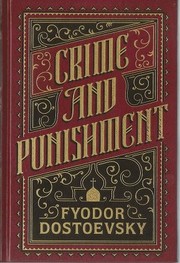
Books like Crime and Punishment
by Fyodor Dostoevsky · 1941
Updated June 2026
Book data: Open Library · Taste signals: BookTaste model
📖 Crime and Punishment (1866) follows Raskolnikov, a destitute student in St. Petersburg who commits a murder to test his theory that extraordinary people stand above ordinary moral law — then unravels as guilt and paranoia consume him. Fans are drawn to its suffocating psychological intensity, the cat-and-mouse dance with detective Porfiry, and Dostoevsky's unflinching dive into guilt, redemption, and what it means to be human. It reads less like a novel and more like a fever dream you can't shake. 🧠
Picked by taste overlap — not popularity alone.
What to read next

The Brothers Karamazov
Fyodor Dostoevsky · 1880
🧠 Psychological depth⚖️ Moral philosophy😰 Guilt & redemption🧠 The deepest well in Russian literature — a murder mystery that is really a sustained philosophical argument about God, free will, and the moral burden of existence, with characters whose inner contradictions rival Raskolnikov's at every turn.
- Matches
- moral philosophy at its peak · guilt and spiritual torment · searing psychological portraiture
- Differs
- ensemble cast, not one protagonist · much longer and slower · less claustrophobic pacing
- Skip if
- You want the tight, feverish single-perspective tension of Crime and Punishment — Karamazov sprawls over a large family and many subplots.
Find my next favorite readNo signup · add a few books to build your radar
●●● strong · ●●○ medium · ●○○ light · ○○○ none
Solid = this book · dashed = Crime and Punishment
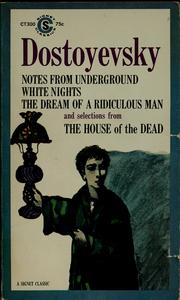
Notes from Underground
Fyodor Dostoevsky · 1864
🧠 Psychological depth🌀 Existential dread⚖️ Moral philosophy🌀 The direct philosophical ancestor of Raskolnikov — the Underground Man's rants against rationalism and his own spite-fueled self-destruction are the raw ore from which Crime and Punishment was smelted.
- Matches
- bitter intellectual antihero · existential self-destruction · dense philosophical monologue
- Differs
- novella length, not a novel · no plot or crime — pure interior voice · even more solipsistic and airless
- Skip if
- You need narrative momentum and external events — Notes from Underground is almost entirely interior rant with minimal story.
Solid = this book · dashed = Crime and Punishment

The Stranger
Albert Camus · 1942
⚖️ Moral philosophy🌀 Existential dread⚖️ The perfect absurdist mirror — Meursault commits a murder with the same detached exceptionalism Raskolnikov theorized about, but where Raskolnikov is consumed by guilt, Meursault feels nothing, making the moral contrast electrifying.
- Matches
- killing as philosophical statement · moral philosophy under scrutiny · existential dread throughout
- Differs
- ice-cold detachment vs. feverish guilt · short and minimalist prose · French colonial Algeria, not Russia
- Skip if
- You crave emotional intensity and psychological spiral — Camus's prose is deliberately flat and emotionally distanced.
Solid = this book · dashed = Crime and Punishment
Not similar books. Similar taste.
It reads the grain of every book you've loved — why it stayed with you — and follows that thread to your next read. Not the bestseller list, not the crowd: just your taste. Free, no signup.
Add books you've read; BookTaste builds your taste radar and recommends from it.
Taste radar — read from the themes shared across Crime and Punishment and the picks below
Strongest taste signals: 🧠 Psychological depth · ⚖️ Moral philosophy · 😰 Guilt & redemption
How taste signals are generated
BookTaste's model reads the themes, moods, settings, and reader hooks of the base book, then scores every pick across those same axes — what overlaps, what diverges. Ordered by taste fit, not by popularity.
Goes deeper
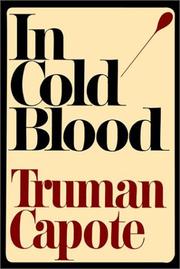
In Cold Blood
Truman Capote · 1966
🕵️ Crime & detection🧠 Psychological depth🕵️ The true-crime counterpart — Capote reconstructs a real Kansas murder with the same obsessive attention to the killers' psychology that Dostoevsky gave Raskolnikov, asking whether understanding a criminal mind demands we rethink guilt and justice.
- Matches
- murderer's psychology front and center · crime & detection intertwined · moral weight of taking a life
- Differs
- nonfiction, not fiction · American Midwest, not 19th-century Russia · external journalistic view, not first-person interiority
- Skip if
- Real-crime details and victims' suffering are treated graphically — skip if you want the philosophical remove of fiction.
Solid = this book · dashed = Crime and Punishment

The Trial
Franz Kafka · 1925
🌀 Existential dread😰 Guilt & redemption⚖️ Moral philosophy😰 Guilt without a crime — Josef K. is arrested and prosecuted for an offense never named, inverting Dostoevsky's formula (crime known, guilt hidden) into pure bureaucratic dread that feels just as suffocating as Raskolnikov's conscience.
- Matches
- existential dread as the engine · crushing psychological pressure · the justice system as labyrinth
- Differs
- surreal and allegorical, not realist · guilt is external and inexplicable, not internal · no redemption arc attempted
- Skip if
- You need emotional catharsis or a redemption thread — Kafka's world offers neither resolution nor warmth.
Solid = this book · dashed = Crime and Punishment

Demons
Fyodor Dostoevsky · 1872
⚖️ Moral philosophy🧠 Psychological depth🌆 Urban grimness🌆 Dostoevsky's most politically savage novel — a provincial town is infiltrated by radical nihilists whose ideology (that destruction is creation) is the logical terminus of the superman theory Raskolnikov tested, ending in multiple murders and self-destruction.
- Matches
- nihilism pushed to its limit · moral philosophy colliding with violence · suffocating psychological portraits
- Differs
- political satire, broader satirical canvas · large ensemble, not one tortured hero · darker and more cynical ending
- Skip if
- You want a tight single-character study — Demons is a wide political panorama with many subplots and a satirical register.
Solid = this book · dashed = Crime and Punishment
Frequently asked
- Is Crime and Punishment a mystery novel?
- Only on the surface — we know the killer from page one. What Dostoevsky is really writing is a psychological thriller about guilt, where the tension comes not from whodunit but from watching Raskolnikov's mind fracture under the weight of what he's done. 🧠 Think of Porfiry as less a detective and more a philosopher sparring partner.
- What books have the same intense psychological atmosphere?
- The closest in raw psychological claustrophobia are The Brothers Karamazov (Dostoevsky again), The Trial by Kafka, and Camus's The Stranger. All three trap you inside a mind — or a system — that makes ordinary moral logic feel unstable. 😰
- Are there modern novels that feel like Crime and Punishment?
- Donna Tartt's The Secret History (1992) is the most cited modern heir: a group of students commit a murder justified by a high-minded intellectual theory, and the novel traces their unraveling with exactly the same mix of guilt, philosophy, and dread. We Need to Talk About Kevin by Lionel Shriver also channels that airless examination of a violent act and its aftermath.
- What should I read after finishing all of Dostoevsky?
- Branch into the existentialists who owe him the most: Sartre's Nausea, Camus's The Stranger, and Kafka's The Trial form a natural progression. 📖 From there, Tolstoy's Anna Karenina offers the same 19th-century Russian moral seriousness with a warmer, less feverish hand — a genuine palate cleanser that hits some of the same notes.
Book data and covers from Open Library. Picks and taste signals are generated by BookTaste's taste model.