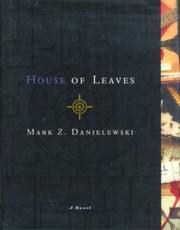
Books like House of Leaves
by Mark Z. Danielewski · 1998
Updated June 2026
Book data: Open Library · Taste signals: BookTaste model
📖 House of Leaves is a 2000 experimental horror novel by Mark Z. Danielewski — a story within a story within a story, framing the disturbing footage of a family whose house is impossibly larger on the inside than the outside. Fans love it for its labyrinthine footnotes, typographic horror, and the way it makes reading itself feel dangerous. It is less about monsters than about obsession, the unreliability of perception, and the terror of spaces that shouldn't exist.
Picked by taste overlap — not popularity alone.
What to read next
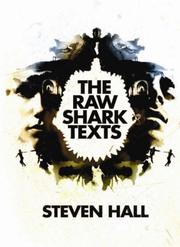
The Raw Shark Texts
Steven Hall · 2007
🌀 Experimental Form🔍 Unreliable Narrator🌀 A conceptual predator hunts through meaning itself — Hall mirrors Danielewski's typographic experiments and unreliable-reality premise with a protagonist who wakes with no memory, pursued by a 'conceptual shark' that swims through language and text.
- Matches
- typographic experimentation · reality-bending mystery · unreliable identity
- Differs
- more linear narrative arc · less dense footnote apparatus · lighter horror tone
- Skip if
- You wanted the pure claustrophobic dread of a physical space — this one is more playful and adventurous than terrifying.
Personalize with my booksNo signup · add a few books to build your radar
●●● strong · ●●○ medium · ●○○ light · ○○○ none
Solid = this book · dashed = House of Leaves
- S.
S.
J.J. Abrams and Doug Dorst · 2013
📜 Layered Documents🌀 Experimental Form📜 A physical object that IS the layered document — S. ships as a mysterious library book filled with marginalia, loose inserts, and nested narratives, delivering the same sensation of excavating someone else's obsession that House of Leaves perfected.
- Matches
- layered documents and marginalia · collaborative unreliable narration · mystery built through found materials
- Differs
- no supernatural horror element · romance subplot dominates · lighter emotional weight
- Skip if
- You want psychological collapse and dread; S. is more of a puzzle-box romance than a horror experience.
Solid = this book · dashed = House of Leaves
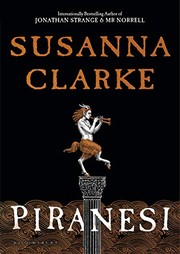
Piranesi
Susanna Clarke · 2020
🏚️ Architectural Dread🔍 Unreliable Narrator🏚️ An infinite impossible house narrated by a man who doesn't understand he's trapped in it — Clarke builds architectural dread from eerie beauty rather than gore, with a journal-entry structure that slowly reveals how thoroughly the narrator's mind has been colonized by the labyrinth.
- Matches
- impossible interior architecture · unreliable diarist narrator · labyrinthine space as existential threat
- Differs
- much shorter and accessible · no typographic experiments · warmer emotional resolution
- Skip if
- You craved the oppressive density and footnote chaos of HoL; Piranesi is elegant and compressed where HoL is overwhelming.
Solid = this book · dashed = House of Leaves
Not similar books. Similar taste.
It reads the grain of every book you've loved — why it stayed with you — and follows that thread to your next read. Not the bestseller list, not the crowd: just your taste. Free, no signup.
Add books you've read; BookTaste builds your taste radar and recommends from it.
Taste radar — read from the themes shared across House of Leaves and the picks below
Strongest taste signals: 🌀 Experimental Form · 🏚️ Architectural Dread · 🔍 Unreliable Narrator
How taste signals are generated
BookTaste's model reads the themes, moods, settings, and reader hooks of the base book, then scores every pick across those same axes — what overlaps, what diverges. Ordered by taste fit, not by popularity.

Only Revolutions
Mark Z. Danielewski · 2006
🌀 Experimental Form📜 Layered Documents🌀 The same author pushing formal experimentation even further — two simultaneous narratives printed upside-down from each other, demanding the reader literally rotate the book, with Danielewski's signature typographic manipulation now applied to an American road-trip myth.
- Matches
- radical typographic experimentation · dual unreliable voices · reader forced into active construction
- Differs
- no horror whatsoever · poetry over prose · notoriously harder to follow than HoL
- Skip if
- You want a story you can actually follow — this is pure formal experiment with almost no conventional plot.
Solid = this book · dashed = House of Leaves
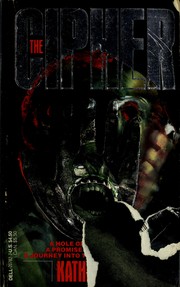
The Cipher
Kathe Koja · 1991
👁️ Cosmic Horror💔 Psychological Unraveling👁️ A hole in a storage room floor that leads nowhere — and dissolves the minds of everyone who looks into it — Koja's debut is raw, visceral body horror that shares HoL's central obsession with an inexplicable void that destroys those it attracts.
- Matches
- inexplicable spatial anomaly at center · obsession leading to psychological collapse · transgressive body horror
- Differs
- no formal experimentation · grittier punk aesthetic · shorter and more conventional structure
- Skip if
- You needed the metafictional layers; The Cipher is straight-ahead visceral horror with no typographic tricks.
Solid = this book · dashed = House of Leaves
Deep cut
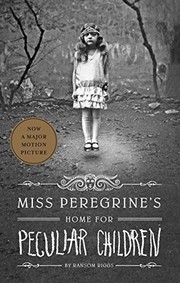
Miss Peregrine's Home for Peculiar Children
Ransom Riggs · 2011
📜 Layered Documents🌑 Gothic Atmosphere📜 Found photographs woven into the narrative — Riggs uses actual vintage photographs as 'evidence' inside the story, delivering the same uncanny sensation of holding documents that feel realer than they should, though in a far more accessible YA package.
- Matches
- found-document narrative structure · photographs as unreliable evidence · hidden world behind ordinary spaces
- Differs
- YA audience, much lighter tone · no horror or dread · linear plot, no formal experiments
- Skip if
- You want dread and formal complexity; this is a light adventure that borrows the found-document aesthetic without the existential weight.
Solid = this book · dashed = House of Leaves
Frequently asked
- Is House of Leaves actually scary or just a gimmick?
- It is both, which is the point — the typographic tricks aren't decoration, they ARE the horror. The way text fragments, shrinks, or crowds the margins physically enacts the claustrophobia the characters feel. Readers who dismiss the format usually miss that the form is inseparable from the fear. 😰
- What do you read after House of Leaves if you want something similar but less demanding?
- Piranesi by Susanna Clarke is the most-recommended gateway: it shares the impossible-architecture premise and the unreliable narrator discovering the horror of the space around them, but it is short, elegantly written, and does not require you to track seventeen nested footnotes. Most HoL fans finish it in a day and consider it a near-perfect sister text.
- Are there other books that use experimental typography like House of Leaves?
- Danielewski's own Only Revolutions goes even further — two stories printed upside-down from each other, requiring you to physically flip the book every eight pages. 🌀 S. by J.J. Abrams and Doug Dorst ships as a physical library book with loose inserts and marginalia. Steven Hall's The Raw Shark Texts uses page-cuts and image sequences. None quite reach HoL's extremity, but all treat the physical book as part of the text.
- Does House of Leaves need to be read in order or can you skip the footnotes?
- You can skip Johnny Truant's footnotes on a first pass and read only the Navidson Record — many readers do. But you lose roughly half the book's meaning and all of its metafictional payoff. The footnotes are a parallel novel about a man losing his mind while reading the manuscript you are reading; skipping them is like watching only the even-numbered episodes of a show.
Book data and covers from Open Library. Picks and taste signals are generated by BookTaste's taste model.