
Books like The Brothers Karamazov
by Fyodor Dostoevsky · 2015
Updated June 2026
Book data: Open Library · Taste signals: BookTaste model
📖 The Brothers Karamazov is Dostoevsky's final and greatest novel — a sprawling family drama set in 19th-century Russia that doubles as a philosophical earthquake: faith vs. doubt, free will vs. determinism, love vs. depravity, all pressed through a murder mystery. Readers are gripped by the three brothers — passionate Dmitri, cerebral Ivan, and saintly Alyosha — each embodying a different answer to the question of how to live. The novel's power lies in ideas that feel urgently alive, characters who argue theology while destroying themselves, and a moral complexity that lingers for years. 🔥
Picked by taste overlap — not popularity alone.
What to read next
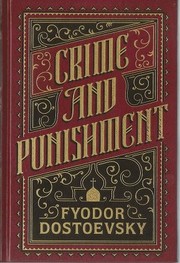
Crime and Punishment
Fyodor Dostoevsky · 1866
🧠 Philosophical Depth🔍 Crime Mystery🌑 Moral Darkness🔍 The most direct companion — Dostoevsky at full throttle: a murder triggers an extended psychological breakdown, with the same agonizing interior monologue, the same guilt-soaked moral wrestling, and the same explosive confrontations that define The Brothers Karamazov.
- Matches
- same author's signature style · murder and moral reckoning · intense psychological interiority
- Differs
- single protagonist, narrower scope · less theology, more psychology · shorter and faster-paced
- Skip if
- You want the wide ensemble cast and sprawling family saga — Crime and Punishment stays tightly inside one tortured mind.
Find my next favorite readNo signup · add a few books to build your radar
●●● strong · ●●○ medium · ●○○ light · ○○○ none
Solid = this book · dashed = The Brothers Karamazov

The Idiot
Fyodor Dostoevsky · 1869
🧠 Philosophical Depth⛪ Faith & Doubt💔 Tragic Love⛪ Dostoevsky's attempt to portray a genuinely good man in a corrupt world — Prince Myshkin is Alyosha's tragic twin, and the novel shares the same suffocating intensity of moral and spiritual crisis set against Russian society.
- Matches
- Dostoevsky's world and style · saintly character vs. fallen world · faith and human fallibility
- Differs
- more tragic, fewer redemptive threads · no murder mystery structure · saint destroys rather than saves
- Skip if
- You need a plot that moves with purpose — The Idiot meanders beautifully but can feel structurally shapeless.
Solid = this book · dashed = The Brothers Karamazov

War and Peace
Leo Tolstoy · 1869
🧠 Philosophical Depth👨👩👦 Family Drama📜 Dense Prose📜 The other supreme achievement of 19th-century Russian fiction — massive in scope and moral seriousness, with an aristocratic family at its center and big questions about history, free will, and how to live threaded through every chapter.
- Matches
- Russian 19th-century world and register · multiple generations, family at center · philosophy embedded in narrative
- Differs
- historical epic scale, Napoleon's wars · far less psychological darkness · Tolstoy's clarity vs. Dostoevsky's chaos
- Skip if
- You came for existential torment and underground passions — Tolstoy's tone is sunnier and more resolved.
Solid = this book · dashed = The Brothers Karamazov
Not similar books. Similar taste.
It reads the grain of every book you've loved — why it stayed with you — and follows that thread to your next read. Not the bestseller list, not the crowd: just your taste. Free, no signup.
Add books you've read; BookTaste builds your taste radar and recommends from it.
Taste radar — read from the themes shared across The Brothers Karamazov and the picks below
Strongest taste signals: 🧠 Philosophical Depth · 👨👩👦 Family Drama · ⛪ Faith & Doubt
How taste signals are generated
BookTaste's model reads the themes, moods, settings, and reader hooks of the base book, then scores every pick across those same axes — what overlaps, what diverges. Ordered by taste fit, not by popularity.

Goes deeper
The Magic Mountain
Thomas Mann · 1924
🧠 Philosophical Depth⛪ Faith & Doubt📜 Dense Prose🧠 Mann's sanatorium epic is the closest Western European equivalent: a novel of ideas where characters literally argue philosophy, theology, and politics for hundreds of pages — the intellectual combat feels like Ivan Karamazov's conversations scaled to a whole cast.
- Matches
- novel of ideas, debate as drama · characters embody competing worldviews · dense, demanding, rewarding prose
- Differs
- 20th-century European setting, no murder · satirical irony Dostoevsky lacks · slower, more detached narrative voice
- Skip if
- You need emotional heat and Russian soul — Mann is cooler and more ironic, the passion is intellectual not visceral.
Solid = this book · dashed = The Brothers Karamazov

Anna Karenina
Leo Tolstoy · 1878
👨👩👦 Family Drama💔 Tragic Love🌑 Moral Darkness💔 A more accessible entry into the moral universe of 19th-century Russian fiction — Tolstoy probes family, desire, and guilt with the same seriousness Dostoevsky brings to sin and salvation, but through tragedy rather than trial.
- Matches
- Russian 19th-century moral world · family and society under pressure · questions of meaning and how to live
- Differs
- more romantic plot, less theology · Tolstoy's realism vs. Dostoevsky's intensity · no crime or courtroom drama
- Skip if
- You want underground passions and religious crisis — Anna Karenina is about social convention and desire, not metaphysics.
Solid = this book · dashed = The Brothers Karamazov
The Brothers
Yu Hua · 2005
👨👩👦 Family Drama🌑 Moral Darkness🌑 Yu Hua's savage Chinese epic follows two brothers through Cultural Revolution and capitalist chaos — family loyalty, betrayal, and survival under historical pressure, with the same tragicomic darkness and willingness to go to the ugliest human places.
- Matches
- brothers at the center of moral conflict · society's violence filtered through family · tragicomic darkness and extremity
- Differs
- 20th-century China, no religion · much more satirical and grotesque · faster, more episodic structure
- Skip if
- You want philosophical dialogue and spiritual searching — Yu Hua is visceral and satirical, not metaphysical.
Solid = this book · dashed = The Brothers Karamazov
Frequently asked
- What books are similar to The Brothers Karamazov but easier to read?
- Start with Crime and Punishment — it's the same Dostoevsky intensity but much more contained: one protagonist, one city, one moral crisis. Anna Karenina is another great on-ramp: Tolstoy's prose is cleaner and the story more immediately gripping, but the moral seriousness is comparable.
- Are there modern novels that feel like The Brothers Karamazov?
- Few modern novels match its scope, but Yu Hua's Brothers comes closest in spirit — two brothers destroyed and remade by historical chaos, told with the same extremity of emotion. For philosophical depth in a contemporary register, try Marilynne Robinson's Gilead, which wrestles with faith, guilt, and grace with real theological seriousness.
- Is The Brothers Karamazov part of a series?
- No — it's a standalone novel, though Dostoevsky intended it as the first part of a longer work that was never written (he died the year after publication). The novel is complete as it stands, with no loose ends requiring a sequel.
- What should I read after finishing all of Dostoevsky?
- The natural next stop is Tolstoy (War and Peace or Anna Karenina) — the other titan of 19th-century Russian fiction, with a very different temperament. After that, Thomas Mann's The Magic Mountain is the closest Western European novel to the Brothers Karamazov's ambition: a battle of ideas enacted through characters, conducted at length.
Book data and covers from Open Library. Picks and taste signals are generated by BookTaste's taste model.