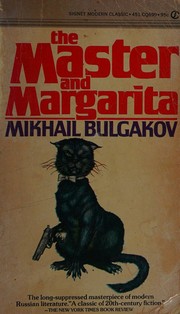
Books like The Master and Margarita
by Mikhail Bulgakov · 1967
Updated June 2026
Book data: Open Library · Taste signals: BookTaste model
✨ The Master and Margarita is Bulgakov's incandescent Soviet-era masterpiece in which the Devil himself descends on Moscow, chaos ensues, and a doomed love story unfolds in parallel with a retelling of Pontius Pilate and Christ. Readers love it for its anarchic wit, its fearless satire of bureaucratic mediocrity, and the way the supernatural feels more morally honest than the mundane world it lampoons. It is at once a philosophical novel, a dark comedy, and a blazing love story — a book that defies every genre it touches.
Picked by taste overlap — not popularity alone.
What to read next
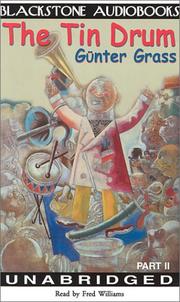
The Tin Drum
Günter Grass · 1959
😈 Dark Satire🌀 Magical Realism🥁 Like Bulgakov, Grass gives you a grotesque, unreliable narrator who tears through the hypocrisies of his society with savage wit, blending the absurd and the historical into something that feels more true than realism.
- Matches
- Savage satirical wit · Surreal narrator in oppressive society · History seen through magical lens
- Differs
- Far darker, less playful tone · WWII Germany, not Soviet Russia · No supernatural villain figure
- Skip if
- You wanted the Devil's gleeful energy and a love story — The Tin Drum is grimmer and the romance is grotesque rather than tender.
Personalize with my booksNo signup · add a few books to build your radar
●●● strong · ●●○ medium · ●○○ light · ○○○ none
Solid = this book · dashed = The Master and Margarita
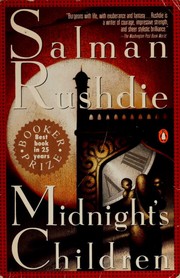
Midnight's Children
Salman Rushdie · 1981
🌀 Magical Realism😈 Dark Satire🏛️ Historical Layers🌙 Rushdie's novel shares Bulgakov's intoxicating blend of magical realism and political satire, using the supernatural to expose the absurdities and tragedies of post-colonial India with the same dizzying narrative bravado.
- Matches
- Magical realism as political critique · Epic scope, chaotic energy · Unreliable, self-aware narrator
- Differs
- Much longer, denser prose · No single diabolical catalyst · Romance is secondary, history dominant
- Skip if
- You came for Bulgakov's tight, theatrical pace and the Devil's dark wit — Rushdie is sprawling and the satirical target feels more distant.
Solid = this book · dashed = The Master and Margarita

One Hundred Years of Solitude
Gabriel García Márquez · 1967
🌀 Magical Realism🏛️ Historical Layers🦋 García Márquez treats the miraculous as utterly mundane — the same narrative move Bulgakov perfects — creating a world where magic and reality are indistinguishable, and the result is equally hypnotic and melancholy.
- Matches
- Magic treated as everyday reality · Cycles of fate and human folly · Lyrical, incantatory prose style
- Differs
- No satire or ironic wit · Multigenerational family saga, not plotted thriller · Slower, more elegiac pace
- Skip if
- You wanted the sharp satirical edge and the diabolical energy — this is wistful and mythic rather than darkly funny.
Solid = this book · dashed = The Master and Margarita
Not similar books. Similar taste.
It reads the grain of every book you've loved — why it stayed with you — and follows that thread to your next read. Not the bestseller list, not the crowd: just your taste. Free, no signup.
Add books you've read; BookTaste builds your taste radar and recommends from it.
Taste radar — read from the themes shared across The Master and Margarita and the picks below
Strongest taste signals: 😈 Dark Satire · 🌀 Magical Realism · 💀 Philosophical Depth
How taste signals are generated
BookTaste's model reads the themes, moods, settings, and reader hooks of the base book, then scores every pick across those same axes — what overlaps, what diverges. Ordered by taste fit, not by popularity.

The Golem and the Djinni
Helene Wecker · 2013
🌀 Magical Realism🕯️ Gothic Atmosphere💘 Doomed Romance✨ Wecker's novel shares Bulgakov's gift for making supernatural outsiders illuminate human society from the inside, here with a golem and a djinni navigating immigrant New York with the same sense of wonder and moral seriousness.
- Matches
- Supernatural figures in human world · Philosophical questions through fantasy · Atmospheric, immersive prose
- Differs
- Far less satirical, more warm-hearted · Historical fantasy, not Soviet dark comedy · Slower, character-driven pacing
- Skip if
- You came for the biting political satire and the Devil's anarchic comedy — this is gentler, more romantic, with none of that subversive edge.
Solid = this book · dashed = The Master and Margarita

Goes deeper
The Trial
Franz Kafka · 1925
😈 Dark Satire💀 Philosophical Depth🎭 Absurdist Comedy⚖️ Kafka's nightmare bureaucracy is the philosophical cousin of Bulgakov's Moscow — both are systems of absurd, menacing power that grind individuals down, rendered with dark comic precision and an atmosphere of inescapable dread.
- Matches
- Absurdist system crushing the individual · Dark comedy from institutional horror · Philosophical existential unease
- Differs
- No magic or supernatural element · No love story or redemption arc · Bleaker, more suffocating, no relief
- Skip if
- You wanted the carnival energy, the Devil's wit, and the romantic thread — Kafka offers none of these; it is pure dread with no release valve.
Solid = this book · dashed = The Master and Margarita

The White Guard
Mikhail Bulgakov · 1925
💘 Doomed Romance🏛️ Historical Layers🕯️ Gothic Atmosphere🕯️ Bulgakov's earlier novel shares the same lyrical intensity and doomed romanticism but trades the Devil's carnival for the chaos of the Russian Civil War, showing the same moral clarity and love of beauty under historical catastrophe.
- Matches
- Same author's voice and moral vision · Doomed characters in historical upheaval · Rich atmospheric prose
- Differs
- Realistic, no supernatural element · War narrative, not satirical fantasy · Less comic, more straightforwardly tragic
- Skip if
- You loved the magical chaos and the Devil — this is realist historical fiction; the wit is quieter and the supernatural is entirely absent.
Solid = this book · dashed = The Master and Margarita
Frequently asked
- What makes The Master and Margarita so hard to categorize?
- It operates simultaneously as political satire, magical fable, love story, and philosophical meditation — all held together by Bulgakov's extraordinary tonal control. The Devil's visit to Soviet Moscow is both screamingly funny and quietly devastating, which is why no single genre label sticks. 😈
- Are there other books that mix the supernatural with political satire as sharply?
- Very few pull it off at the same level. Günter Grass's The Tin Drum and Salman Rushdie's Midnight's Children come closest — both use magical disruption to expose political absurdity — but neither has quite Bulgakov's anarchic lightness. If you want pure dark satire without the magic, Kafka's The Trial is the philosophical sibling.
- Is the love story in The Master and Margarita central, or can I skip those parts?
- It is absolutely central — Margarita's devotion is the moral heart of the novel and what makes it more than just a satirical romp. The love story gives the Devil's chaos its emotional weight. If you loved that dimension, The Golem and the Djinni and Bulgakov's own The White Guard both offer similar doomed, atmospheric romance.
- What should I read after working through all the obvious picks?
- Dig into Bulgakov's The White Guard and Heart of a Dog — they share the same moral universe and lyrical voice, and Heart of a Dog is almost as wickedly funny as The Master and Margarita. 🕯️ After that, Grass's The Tin Drum is the one book that genuinely lives in the same register of historical grotesque.
Book data and covers from Open Library. Picks and taste signals are generated by BookTaste's taste model.