
Books like Thinking, Fast and Slow
by Daniel Kahneman · 2011
Updated June 2026
Book data: Open Library · Taste signals: BookTaste model
🧠 Thinking, Fast and Slow is Daniel Kahneman's landmark exploration of the two systems that drive the way we think — the fast, intuitive System 1 and the slow, deliberate System 2. Fans love it for the way it quietly dismantles our confidence in our own judgment, revealing the cognitive biases and heuristics that shape every decision we make. It reads less like a textbook and more like a guided tour of your own mind, equal parts unsettling and illuminating. If you finished it wanting more science-backed insight into human irrationality, the picks below were chosen for exactly that craving.
Picked by taste overlap — not popularity alone.
What to read next
Start here
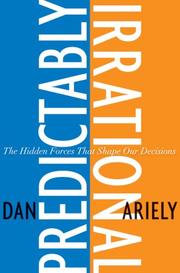
Predictably Irrational
Dan Ariely · 2008
🧠 Behavioral Science⚖️ Decision Making🎯 The closest companion read to Kahneman — Ariely uses witty experiments to show how our irrational behaviors are not random but predictable and systematic, covering the same territory of hidden cognitive forces with more humor and personal anecdote.
- Matches
- behavioral economics experiments · systematic human irrationality · accessible science writing
- Differs
- lighter academic tone · more anecdote-driven · less Nobel-prize depth
- Skip if
- You want rigorous academic grounding rather than entertaining popular-science storytelling.
Personalize with my booksNo signup · add a few books to build your radar
●●● strong · ●●○ medium · ●○○ light · ○○○ none
Solid = this book · dashed = Thinking, Fast and Slow
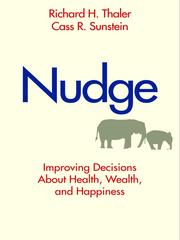
Nudge
Richard H. Thaler and Cass R. Sunstein · 2008
🧠 Behavioral Science🌍 Social Systems🏛️ Directly applies Kahneman's cognitive-bias framework to public policy and choice architecture, showing how small environmental changes can steer people toward better decisions without restricting freedom.
- Matches
- cognitive biases in real decisions · behavioral economics foundation · System 1 exploits
- Differs
- policy-focused, not purely explanatory · co-authored, different pace · more prescriptive than descriptive
- Skip if
- You have no interest in government or institutional policy applications of behavioral science.
Solid = this book · dashed = Thinking, Fast and Slow
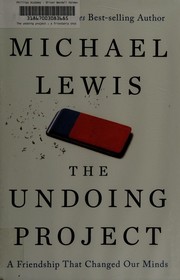
The Undoing Project
Michael Lewis · 2016
✍️ Narrative Nonfiction🧠 Behavioral Science📖 Tells the human story behind the science — Michael Lewis narrates the unlikely friendship between Kahneman and Amos Tversky and how their collaboration produced the ideas in Thinking, Fast and Slow, giving the research emotional depth it never had on its own.
- Matches
- Kahneman and Tversky research · cognitive bias origins · psychology of judgment
- Differs
- narrative biography, not science · character-driven storytelling · no self-help angle
- Skip if
- You want new behavioral science ideas rather than the backstory of ones you already know.
Solid = this book · dashed = Thinking, Fast and Slow
Not similar books. Similar taste.
It reads the grain of every book you've loved — why it stayed with you — and follows that thread to your next read. Not the bestseller list, not the crowd: just your taste. Free, no signup.
Add books you've read; BookTaste builds your taste radar and recommends from it.
Taste radar — read from the themes shared across Thinking, Fast and Slow and the picks below
Strongest taste signals: 🧠 Behavioral Science · ⚖️ Decision Making · 📊 Data & Statistics
How taste signals are generated
BookTaste's model reads the themes, moods, settings, and reader hooks of the base book, then scores every pick across those same axes — what overlaps, what diverges. Ordered by taste fit, not by popularity.
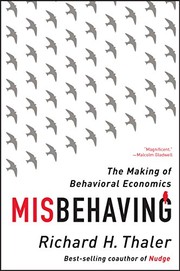
Misbehaving
Richard H. Thaler · 2015
🧠 Behavioral Science⚖️ Decision Making✍️ Narrative Nonfiction🏆 A Nobel laureate's memoir and manifesto — Thaler traces behavioral economics from fringe idea to mainstream discipline, covering the same biases Kahneman describes but through the lens of battling classical economists who refused to believe humans were irrational.
- Matches
- behavioral economics core ideas · irrational economic decisions · academic research narrative
- Differs
- memoir structure, more personal · economics-specific focus · less cognitive psychology depth
- Skip if
- You are not interested in the academic politics of economics and prefer pure psychology.
Solid = this book · dashed = Thinking, Fast and Slow
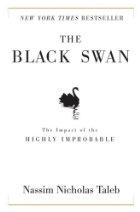
The Black Swan
Nassim Nicholas Taleb · 2007
⚖️ Decision Making📊 Data & Statistics💥 Attacks the same overconfidence Kahneman diagnoses but from the angle of rare, unpredictable events — Taleb argues we systematically underestimate uncertainty and construct false narratives after the fact, with iconoclastic energy that is electrifying or exhausting depending on your tolerance.
- Matches
- cognitive biases around prediction · overconfidence and heuristics · challenging expert judgment
- Differs
- more polemical and combative · philosophy mixed with probability · no structured experiment format
- Skip if
- You dislike contrarian, sometimes arrogant prose — Taleb's style is a love-it-or-hate-it proposition.
Solid = this book · dashed = Thinking, Fast and Slow
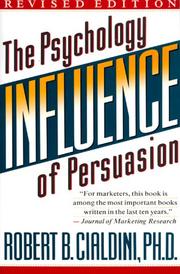
Influence
Robert B. Cialdini · 1984
🧠 Behavioral Science💡 Self-Improvement🎭 The classic on persuasion — Cialdini catalogues the psychological triggers that bypass rational thinking and make us say yes, directly mapping onto Kahneman's System 1 shortcuts in a way that is both validating and mildly terrifying.
- Matches
- System 1 automatic responses · psychological principles of behavior · research-backed and practical
- Differs
- focus on social influence, not cognition broadly · more applied and self-protective · older, pre-replication-crisis research
- Skip if
- You want cutting-edge academic rigor — some of Cialdini's older studies have not replicated cleanly.
Solid = this book · dashed = Thinking, Fast and Slow
Frequently asked
- What books are most similar to Thinking, Fast and Slow?
- Predictably Irrational by Dan Ariely is the closest match in tone and subject — both cover behavioral economics experiments showing systematic irrationality, but Ariely's writing is lighter and funnier. For the origin story of Kahneman's ideas, The Undoing Project by Michael Lewis is the natural companion.
- Is there a more readable version of Thinking, Fast and Slow?
- If Kahneman felt too dense, try Predictably Irrational — same ideas, breezier pace. Nudge by Thaler and Sunstein is also more applied and conversational. Both assume zero prior knowledge of behavioral economics. 📚
- What should I read after Thinking, Fast and Slow if I want to go deeper into cognitive biases?
- Misbehaving by Richard Thaler (also a Nobel laureate) goes deeper into the behavioral economics discipline and its academic battles. For the statistics and probability side of overconfidence, The Black Swan by Nassim Taleb pushes further — though his tone is considerably more combative than Kahneman's.
- Are there books like Thinking, Fast and Slow that focus on practical takeaways?
- Nudge is the most policy-practical of the bunch, showing how to design environments that exploit System 1 for better outcomes. Influence by Cialdini is the best pick if you want to apply the same psychological principles to everyday persuasion and self-defense against manipulation. 💡
Book data and covers from Open Library. Picks and taste signals are generated by BookTaste's taste model.