
Books like War and Peace
by Leo Tolstoy · 1864
Updated June 2026
Book data: Open Library · Taste signals: BookTaste model
📖 War and Peace is Leo Tolstoy's colossal 1869 novel tracing five aristocratic Russian families through the Napoleonic Wars — a work so vast it invented its own category. Fans love it for the sheer human density: hundreds of characters who feel ruthlessly real, philosophical digressions on history and free will, and a narrative that swings between battlefield carnage and Moscow ballrooms with absolute confidence. It rewards patience with one of fiction's most complete portraits of how war reshapes — and reveals — the people caught inside it. 🏰 If you loved the scope, the moral seriousness, and the sense of a whole civilization rendered on the page, these picks carry that same ambition.
Picked by taste overlap — not popularity alone.
What to read next

Anna Karenina
Leo Tolstoy · 1878
🏛️ Society & Class❤️ Character Drama💘 Romance❤️ The most natural next step: Tolstoy operating at nearly the same moral and psychological depth, pivoting from war to the quieter catastrophe of marriage, adultery, and social judgment in the same Russian aristocratic world.
- Matches
- Same Russian aristocratic society · Tolstoy's signature moral weight · Multiple interlocking storylines
- Differs
- No war or battlefield scenes · More intimate domestic scale · Romance drives the central plot
- Skip if
- You came to War and Peace purely for the Napoleonic campaign and military strategy — Anna Karenina offers none of that.
Personalize with my booksNo signup · add a few books to build your radar
●●● strong · ●●○ medium · ●○○ light · ○○○ none
Solid = this book · dashed = War and Peace

Closest match
The Brothers Karamazov
Fyodor Dostoevsky · 1880
🧠 Philosophical Depth❤️ Character Drama🏛️ Society & Class🧠 Dostoevsky's final novel matches War and Peace in philosophical ambition and emotional extremity — a murder mystery at the surface, a sustained argument about God, suffering, and moral responsibility underneath.
- Matches
- Russian 19th-century world · Profound philosophical dimension · Large cast of psychologically complex characters
- Differs
- Compressed urban setting, not epic sweep · No historical battle scenes · Darker, more claustrophobic tone
- Skip if
- You need the panoramic historical canvas and sense of a nation in motion — Dostoevsky's lens is more microscopic.
Solid = this book · dashed = War and Peace
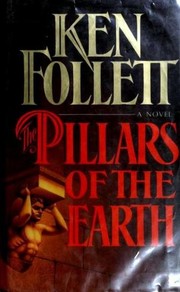
The Pillars of the Earth
Ken Follett · 1989
🌍 Epic Scope🏛️ Society & Class🕰️ Historical Detail🏰 Follett delivers the same satisfaction of watching an entire society constructed and torn apart over decades, following multiple generations through medieval England with the same novelistic appetite for politics, ambition, and fate.
- Matches
- Multi-generational epic scale · War and political upheaval woven through · Large ensemble cast across classes
- Differs
- Far more accessible prose pace · Medieval England, not Russia · More thriller-adjacent plotting
- Skip if
- You were drawn to Tolstoy's literary style and philosophical essays — Follett is a page-turner, not a philosophical novelist.
Solid = this book · dashed = War and Peace
Not similar books. Similar taste.
It reads the grain of every book you've loved — why it stayed with you — and follows that thread to your next read. Not the bestseller list, not the crowd: just your taste. Free, no signup.
Add books you've read; BookTaste builds your taste radar and recommends from it.
Taste radar — read from the themes shared across War and Peace and the picks below
Strongest taste signals: 🌍 Epic Scope · ⚔️ War & Battle · 🏛️ Society & Class
How taste signals are generated
BookTaste's model reads the themes, moods, settings, and reader hooks of the base book, then scores every pick across those same axes — what overlaps, what diverges. Ordered by taste fit, not by popularity.
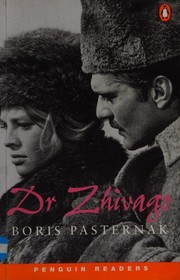
Doctor Zhivago
Boris Pasternak · 1957
🌍 Epic Scope⚔️ War & Battle💘 Romance❄️ The closest structural twin in spirit: a sweeping Russian novel set against revolution and civil war, following one man's inner life as history dismantles everything around him — lyrical, melancholy, and vast.
- Matches
- Russia under siege from historical upheaval · Epic personal and national scale · War reshaping ordinary lives
- Differs
- More lyrical and impressionistic prose · Soviet Revolution, not Napoleonic Wars · Romance is more central
- Skip if
- You want the density of Tolstoy's military chapters and battle tactics — Zhivago is more interior and elegiac.
Solid = this book · dashed = War and Peace
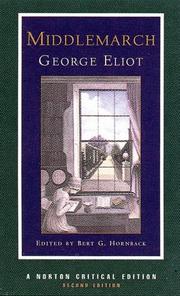
Middlemarch
George Eliot · 1872
🏛️ Society & Class❤️ Character Drama🧠 Philosophical Depth🏡 George Eliot's masterpiece shares War and Peace's moral seriousness and panoramic social vision, mapping the full texture of a provincial English community with the same conviction that ordinary lives carry novelistic weight.
- Matches
- Panoramic society across many characters · Deep moral and psychological realism · 19th-century world rendered in full
- Differs
- No war or battle · English provincial setting, not Russian imperial · Quieter, more domestic stakes
- Skip if
- The military history and sense of national destiny are what hooked you — Middlemarch has none of that.
Solid = this book · dashed = War and Peace
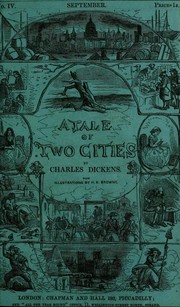
A Tale of Two Cities
Charles Dickens · 1859
⚔️ War & Battle🕰️ Historical Detail❤️ Character Drama⚡ Dickens places individual lives inside a civilization-shaking historical event — the French Revolution — and asks the same question Tolstoy obsesses over: how much agency does a single person have against the sweep of history?
- Matches
- War and revolution as historical backdrop · Fate of individuals inside mass historical events · Moral reckoning and sacrifice
- Differs
- Much shorter and plot-driven · France not Russia, different cultural texture · Less psychological depth per character
- Skip if
- You need the long, immersive, slow-build character arcs — A Tale of Two Cities is brisk and melodramatic by comparison.
Solid = this book · dashed = War and Peace
Frequently asked
- What makes War and Peace so hard to replace?
- Its combination of true epic scale (the full arc of a society at war), psychological depth that rivals any 20th-century novel, and Tolstoy's restless philosophical intelligence is genuinely rare. Most books offer one or two of these; very few deliver all three simultaneously. That is what you are chasing.
- Should I read Dostoevsky or Tolstoy's other novels first?
- If you loved the social panorama and moral realism, go to Anna Karenina next — it is the same Tolstoy world at a more intimate scale. If the philosophical weight and the 'big questions' gripped you most, jump to The Brothers Karamazov. They scratch different parts of the same itch. 📚
- Are there more modern books with the same feel?
- Doctor Zhivago (1957) and The Pillars of the Earth (1989) are the most direct modern heirs in terms of scope and historical immersion. For 21st-century equivalents, look at Hilary Mantel's Wolf Hall trilogy — it has the same patience with how power and history reshape people over decades.
- Is War and Peace really worth the length?
- Yes — but the reader who asks this question usually needs to know that the payoff is cumulative. The famous philosophical epilogue divides readers, but the characters become genuinely irreplaceable companions by the halfway point. Stick through Austerlitz; the novel earns its length.
Book data and covers from Open Library. Picks and taste signals are generated by BookTaste's taste model.